Top 10 Ventilator Technologies for Better Patient Outcomes

Time:2026-09-22 Author:Henry
0%

Ventilator technology has moved beyond simply pushing air into the lungs. Modern systems can support safer, more individualized respiratory care, from noninvasive ventilation and high-flow oxygen to closed-loop control and advanced patient monitoring. Yet the central question remains: how can ventilator technology improve patient outcomes in real clinical settings?

Dr. John J. Marini, a respected critical care physician and researcher, has emphasized, “Mechanical ventilation is a life-supporting intervention, not a treatment for the underlying disease.” That distinction matters. A ventilator may reduce breathing effort, improve oxygen delivery, and protect vulnerable lung tissue. It cannot replace diagnosis, careful nursing observation, or timely medical decisions. The patient’s skin, chest movement, comfort, and blood-gas results still tell an essential story.

The technologies discussed in this guide focus on measurable benefits. Lung-protective ventilation can help limit excessive pressure and volume. Capnography may reveal ventilation changes before visible deterioration occurs. Synchrony tools can reduce uncomfortable struggles between the patient and machine. Humidification supports airway comfort, while smarter alarms may help clinicians respond faster. Small details matter. A poorly fitted mask can cause leakage, anxiety, and treatment failure.

No device is perfect. Some automated features can create false confidence, especially when staff overlook clinical context. Outcomes depend on training, protocols, maintenance, and human judgment. This introduction examines ten ventilator technologies that may support better recovery, while recognizing their limits. Better equipment helps, but attentive care remains the deciding factor.
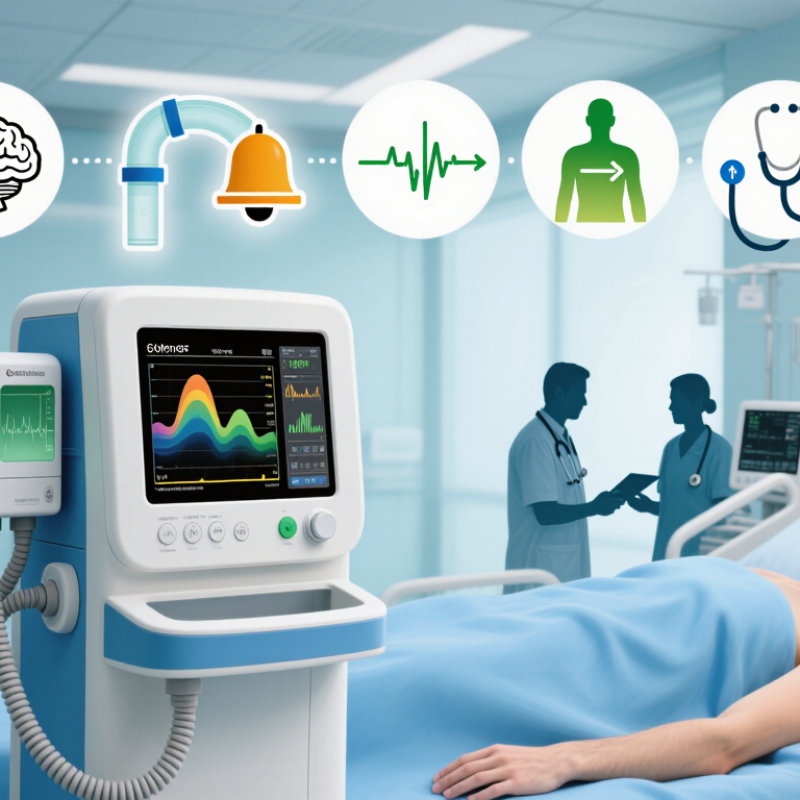
Top 10 Ventilator Technologies for Better Patient Outcomes

Ventilator Technology Fundamentals and Patient Safety Principles

Top 10 Ventilator Technologies for Better Patient Outcomes

Ventilator fundamentals begin with controlled pressure, volume, flow, oxygen concentration, and timing. Lung-protective ventilation remains central. In the ARDSNet trial, 6 mL/kg predicted body weight reduced mortality to 31%, compared with 39.8% using 12 mL/kg (NEJM, 2000). Modern systems support this approach through low-tidal-volume modes, pressure monitoring, automatic leak compensation, and real-time capnography. Small details matter. A misplaced sensor can distort clinical decisions.

Patient safety depends on more than advanced software. High and low pressure alarms, apnea backup, oxygen failure alerts, and battery capacity protect patients during sudden changes. Heated humidification reduces airway dryness, while closed suction systems can limit circuit disruption. The LUNG SAFE study reviewed 2,813 patients across 459 intensive care units. Only 34.1% of eligible patients received an ARDS diagnosis, showing how recognition gaps can weaken otherwise sound technology (JAMA, 2016).

Adaptive support, non-invasive ventilation interfaces, spontaneous breathing trials, and weaning analytics may reduce unnecessary support. Yet automation is not infallible. Algorithms can misread leaks, agitation, secretions, or weak respiratory effort. Clinicians must confirm displayed values against the patient’s chest movement, skin color, blood gases, and comfort. WHO reports that approximately one in ten patients experiences harm during healthcare delivery, making alarm design, staff training, maintenance, and human oversight essential (WHO Global Patient Safety Action Plan, 2021). A quiet alarm is not always a safe alarm.

Ten Core Ventilator Technologies and Their Clinical Functions

Top 10 Ventilator Technologies for Better Patient Outcomes

Ten core ventilator technologies guide safer, more responsive respiratory care. Volume control delivers a set tidal volume, while pressure control limits inspiratory pressure. Dual-control modes adjust pressure to achieve a target volume. Positive end-expiratory pressure, or PEEP, keeps unstable alveoli open after exhalation. Pressure support reduces breathing effort during spontaneous breaths. Flow-triggering detects patient effort quickly and improves synchrony. These functions matter when a patient becomes anxious, weak, or suddenly less compliant.

Leak compensation maintains effective support during noninvasive ventilation. Heated humidification protects airway tissue and helps mobilize secretions. Capnography tracks exhaled carbon dioxide, revealing ventilation changes before visible distress. Integrated oxygen saturation monitoring adds continuous information about oxygenation. Intelligent alarm systems identify disconnection, high pressure, apnea, or changing minute volume. Automated weaning tools can support spontaneous breathing trials, although clinical judgment remains essential. No mode is universally best. A quiet waveform can still hide fatigue.

Tips: Confirm the prescribed targets, then assess the patient, not only the screen. Check chest movement, breath sounds, comfort, and synchrony. Reassess after each adjustment. Excessive oxygen or PEEP may create harm, even when numbers look reassuring. Document the response clearly, including failed attempts and unexpected changes. Small leaks, secretions, or poor positioning can distort readings. The technology helps, but it does not replace careful observation.

How Advanced Ventilation Modes Support Personalized Respiratory Care

Better patient outcomes depend on more than higher oxygen levels. Advanced ventilator modes help clinicians match support to each patient’s changing respiratory effort. Pressure support can reduce the work of breathing during spontaneous breaths. Volume-assured modes aim to maintain a target volume while adjusting pressure. Proportional modes respond more closely to patient effort. These options may improve comfort, synchrony, and gas exchange when selected carefully.

Tips: Review the patient, not only the screen. Check respiratory rate, tidal volume, skin color, waveforms, and comfort at the bedside. Confirm alarm limits after every major adjustment. A leaking mask can confuse automated support. Small leaks matter. Use local protocols and reassess after changes, especially during sleep, transport, or recovery from sedation.

Personalized ventilation requires clinical judgment and reliable monitoring. A mode that helps one patient may increase discomfort in another. Some algorithms can react poorly to irregular effort or weak signals. That limitation deserves attention. Clinicians should compare device data with blood gases, physical findings, and the patient’s own feedback. In practice, gradual adjustments often work better than dramatic changes. Documentation also matters, because a clear record shows why support changed and whether the patient improved. Human oversight remains essential, even when technology appears highly responsive.

Top 10 Ventilator Technologies for Better Patient Outcomes - How Advanced Ventilation Modes Support Personalized Respiratory Care
No. Ventilator Technology or Mode Core Operating Principle Personalized Care Contribution Common Clinical Applications Potential Patient Benefits Important Considerations Evidence Status
1 Volume-Controlled Assist/Control Delivers a preset tidal volume for each assisted or mandatory breath while airway pressure varies according to respiratory-system mechanics. Allows clinicians to set a consistent tidal volume and adjust respiratory rate, oxygen concentration, and positive end-expiratory pressure according to the patient’s condition. Acute respiratory failure, postoperative ventilation, and patients requiring controlled minute ventilation. Reliable delivery of a targeted minute ventilation and easier monitoring of tidal-volume exposure. High airway pressures may occur when compliance decreases or airway resistance rises. Lung-protective tidal-volume selection remains essential. Established
2 Pressure-Controlled Ventilation Provides breaths at a preset inspiratory pressure for a defined inspiratory time; delivered tidal volume changes with lung mechanics. Enables pressure limitation and adjustment of inspiratory time for patients with changing compliance or airway resistance. Acute hypoxemic respiratory failure, reduced respiratory-system compliance, and situations requiring control of peak inspiratory pressure. Can improve inspiratory-flow control and limit the set inspiratory pressure. Delivered tidal volume must be monitored continuously because it can fall when compliance worsens or resistance increases. Established
3 Pressure Support Ventilation Supplies a preset pressure boost during spontaneous inspiration while the patient determines respiratory rate and usually inspiratory time. Pressure support can be adjusted to reduce work of breathing while preserving spontaneous respiratory effort. Ventilator weaning, spontaneous breathing trials, and partial ventilatory support in cooperative patients. May improve comfort, reduce respiratory-muscle load, and support assessment of readiness for liberation. Requires an adequate respiratory drive and close observation for fatigue, apnea, excessive tidal volume, or rapid shallow breathing. Established
4 Synchronized Intermittent Mandatory Ventilation Provides a set number of mandatory breaths synchronized with patient effort while allowing spontaneous breaths between mandatory breaths. Combines mandatory support with spontaneous breathing and can be paired with pressure support for individualized assistance. Selected weaning strategies, partial ventilatory support, and patients with variable spontaneous respiratory activity. Preserves some spontaneous breathing and permits gradual adjustment of mandatory support. Routine use as a superior weaning method over other approaches is not consistently supported; patient response should guide selection. Established, selective use
5 Volume-Targeted Pressure Control Automatically adjusts inspiratory pressure within defined limits to achieve a clinician-selected target tidal volume. Adapts pressure assistance to changing compliance and resistance while maintaining a target volume range. Patients with changing respiratory mechanics, including some cases of acute respiratory failure and postoperative care. May reduce unnecessary pressure when mechanics improve and increase support when mechanics deteriorate. Target volume, pressure limits, and alarm settings require careful review. Rapid changes in mechanics may produce variable support. Established technology
6 Airway Pressure Release Ventilation Maintains a high continuous airway pressure for a prolonged period and briefly releases pressure to facilitate ventilation, with spontaneous breathing often permitted. Offers an alternative pressure-based strategy when clinicians want prolonged alveolar recruitment and preserved spontaneous effort. Selected patients with severe hypoxemic respiratory failure and difficult oxygenation, according to local protocols. May support oxygenation and spontaneous breathing in carefully selected patients. Optimal settings and outcome advantages remain debated. It may be inappropriate for some patients with obstructive disease, poor respiratory drive, or significant hemodynamic instability. Selective, evolving evidence
7 Noninvasive Ventilation Provides ventilatory assistance through a mask or similar interface without an endotracheal tube, commonly using bilevel pressure or continuous positive airway pressure. Interface type, inspiratory pressure, expiratory pressure, backup rate, and oxygen concentration can be tailored to the patient’s respiratory pattern and tolerance. Acute exacerbations of chronic obstructive pulmonary disease with respiratory acidosis, cardiogenic pulmonary edema, and selected post-extubation or chronic respiratory conditions. Can reduce intubation risk in appropriate patients and avoid complications associated with invasive airways. Requires airway protection, adequate cooperation, close monitoring, and rapid access to intubation if the patient deteriorates. Strong in selected indications
8 Proportional Assist Ventilation Provides assistance in proportion to the patient’s instantaneous inspiratory effort rather than delivering a fixed level of support. Matches assistance more closely to changing patient demand and may reduce the mismatch between patient effort and ventilator output. Partially assisted ventilation and weaning in patients with reliable spontaneous respiratory drive. May improve comfort, synchrony, and participation in breathing compared with fixed-support strategies. Requires stable respiratory drive and accurate estimation of respiratory-system mechanics. It is not suitable for patients unable to generate reliable effort. Promising, patient selection required
9 Neurally Adjusted Ventilatory Assist Uses electrical activity from the diaphragm to detect neural respiratory effort and proportionally control ventilator assistance and cycling. Uses the patient’s neural respiratory signal to improve timing between neural effort and ventilator support. Patients with patient–ventilator asynchrony, difficult weaning, or complex spontaneous breathing patterns in specialized critical-care settings. May improve synchrony and provide more individualized support when conventional triggering is problematic. Requires specialized monitoring and an appropriately positioned esophageal electrode catheter; evidence for mortality benefit is limited. Specialized, emerging evidence
10 Automated Closed-Loop Ventilation and Weaning Uses monitored variables such as tidal volume, respiratory rate, oxygen saturation, or end-tidal carbon dioxide to automatically adjust selected ventilator settings within clinician-defined limits. Supports continuous adaptation of ventilation and oxygenation to changing patient needs while retaining clinician-set safety boundaries. Longer-duration ventilation, changing respiratory mechanics, and structured weaning protocols in monitored intensive-care environments. May reduce manual workload, improve consistency of adjustments, and shorten time spent in certain ventilation stages. Automation does not replace bedside assessment. Sensor errors, inappropriate targets, or poor alarm configuration can lead to unsuitable support. Evolving, protocol dependent

Clinical note: Ventilator mode selection should be individualized according to disease process, respiratory-system mechanics, gas exchange, neurological status, patient comfort, synchrony, hemodynamics, and local clinical protocols. The listed technologies are not ranked by proven superiority, and potential benefits depend on appropriate patient selection and monitoring.

Monitoring, Automation, and Connectivity for Better Patient Outcomes

Top 10 Ventilator Technologies for Better Patient Outcomes

Monitoring, automation, and connectivity are reshaping how clinicians manage mechanical ventilation. Modern ventilators can display pressure, flow, volume, compliance, and respiratory effort in real time. A clear bedside screen helps clinicians notice worsening synchrony before oxygen levels decline. Trend graphs also reveal gradual changes that a single reading may hide. Numbers need context. A high pressure reading may reflect secretions, patient movement, or reduced lung compliance. Care teams still need assessment, auscultation, and clinical judgment.

Automation can adjust support according to measured patient effort and changing respiratory mechanics. These functions may reduce repetitive adjustments and support more consistent care. However, automated control is not a substitute for trained oversight. Alarm systems should prioritize urgent events without creating constant noise. Too many alarms can cause fatigue. Silence is not safety. Clinicians should review alarm limits during transfers, procedures, and major changes in condition.

Connectivity adds another layer of value. Secure data exchange can place ventilator readings beside blood gases, vital signs, and nursing observations. This wider view supports faster communication across intensive care teams. It may also help identify patterns during handoffs. Yet connected systems can display incomplete or delayed information. Staff must verify timestamps, settings, and patient identity. Regular data audits, access controls, and downtime plans are essential. The strongest technology is not always the most advanced; it is the one clinicians can understand, question, and use safely at the bedside.

Evaluating Ventilator Technologies in Different Clinical Settings

Evaluating the top ten ventilator technologies requires clinical context, not a feature checklist. In an adult ICU, pressure and volume control, lung-protective targets, waveform displays, auto-weaning support, humidification, and reliable alarms matter during unstable oxygenation. The LUNG SAFE study examined 2,377 ARDS patients across 459 ICUs in 50 countries. Hospital mortality reached 40.2% in mild ARDS, 46.1% in moderate ARDS, and 62.9% in severe ARDS, according to The Lancet in 2016. These figures make monitoring and consistent tidal-volume delivery more than technical conveniences.

Emergency departments need simple non-invasive ventilation and high-flow oxygen. Interfaces must fit quickly under pressure. Transport ventilators must tolerate battery limits, vibration, and changing gas supplies. In neonatal units, tiny tidal volumes and leak compensation require separate testing. For severe ARDS, the PROSEVA trial reported 28-day mortality of 16.0% with prolonged prone positioning, versus 32.8% with conventional positioning, in the New England Journal of Medicine in 2013. This supports integrated positioning protocols, but not blind trust in automation. Evidence remains uneven across age groups and low-resource settings. I would document failed alarms and patient discomfort, not only successful sessions.

Tips: Compare technologies using outcomes, synchrony, alarm response, staff workload, and maintenance time. Test every mode with local circuits and simulated leaks. A polished interface can still hide poor usability. Reassess settings after every transfer.

FAQS

What does volume control do in mechanical ventilation?

It delivers a set tidal volume with each supported breath. Pressure may change when lung compliance changes. Monitor pressure, chest movement, and patient comfort.

How does pressure control differ from volume control?

Pressure control limits inspiratory pressure during breathing. Delivered volume can vary with resistance or compliance. A stable pressure does not guarantee adequate ventilation.

Why is PEEP used?

PEEP helps keep unstable alveoli open after exhalation. It may improve oxygenation and reduce repeated alveolar collapse. Excessive PEEP can cause harm.

What are pressure support and flow-triggering used for?

Pressure support reduces effort during spontaneous breaths. Flow-triggering detects patient effort quickly. These functions can improve synchrony, but poor positioning may still cause discomfort.

How do leak compensation and heated humidification help?

Leak compensation maintains support during noninvasive ventilation. Heated humidification protects airway tissue and helps loosen secretions. Small leaks can still distort readings.

What information does capnography provide?

Capnography tracks exhaled carbon dioxide continuously. It can reveal ventilation changes before obvious distress appears. Interpret the waveform with clinical assessment.

Can automated weaning and alarm systems replace clinicians?

No. Automation may adjust support or assist spontaneous breathing trials. Clinicians must confirm settings, examine the patient, and reassess after changes. Silence is not safety.

How should ventilator technology be evaluated in different clinical settings?

Adult intensive care, emergency care, transport, and neonatal care need different priorities. Test modes with local circuits, simulated leaks, and battery limits. A polished screen can still hide poor usability. I would document failed alarms and discomfort, not only successful sessions.

Conclusion

Modern ventilator technology plays a vital role in improving respiratory support while promoting patient safety. This overview explains fundamental ventilation principles, including the importance of appropriate pressure, volume, oxygen concentration, alarms, and protective settings. It also introduces ten core technologies and their clinical functions, such as adaptive ventilation, pressure support, synchronized breathing assistance, noninvasive ventilation, and lung-protective strategies. Together, these tools help clinicians respond to changing respiratory needs and reduce the risk of complications.

The article also explores how advanced ventilation modes support personalized respiratory care by matching treatment to each patient’s condition, effort, and recovery stage. Integrated monitoring, automated adjustments, data connectivity, and decision-support features can improve awareness and enable faster clinical responses. By comparing these technologies across intensive care, emergency, transport, neonatal, and long-term care settings, readers can better understand how can ventilator technology improve patient outcomes through safer, more precise, and more individualized respiratory management.

Henry

Henry

Henry is a dedicated marketing professional with a profound expertise in the company's offerings. With years of experience in the industry, he possesses an impressive understanding of the market dynamics and consumer behaviors that drive success. Henry is committed to sharing his insights through......