China Top 10 Ventilator Manufacturers What Are They For?

Time:2026-10-02 Author:Aria
0%

When a patient cannot breathe effectively, a ventilator supports or replaces spontaneous breathing. It delivers controlled amounts of oxygen-rich air through a mask or breathing tube. So, what is a medical ventilator used for? It helps manage respiratory failure, anesthesia, severe infections, lung injuries, and certain chronic conditions. Different models serve different settings. Intensive care units need advanced monitoring and precise pressure control. Ambulances require compact designs, stable battery performance, and quick setup.

This introduction examines China’s top 10 ventilator manufacturers and the roles their devices serve. It considers product categories, clinical applications, manufacturing experience, quality systems, and after-sales support. Important details include tidal-volume accuracy, alarm functions, humidification options, data connectivity, and ease of cleaning. Certifications and regulatory registrations also deserve careful review. They should be verified for the intended market, not assumed from promotional language.

No ranking is flawless. A manufacturer with strong export experience may not suit every hospital. A lower-cost model may appear practical, yet training and maintenance can change its real value. I have therefore treated performance claims cautiously and focused on evidence that buyers can check. Product manuals, independent evaluations, service records, and user feedback provide useful context. Clinical decisions must remain with qualified healthcare professionals. This guide is not a substitute for medical advice. Instead, it offers a practical starting point for understanding China’s ventilator industry, comparing manufacturers responsibly, and identifying equipment that fits patient needs, staff skills, and facility conditions.
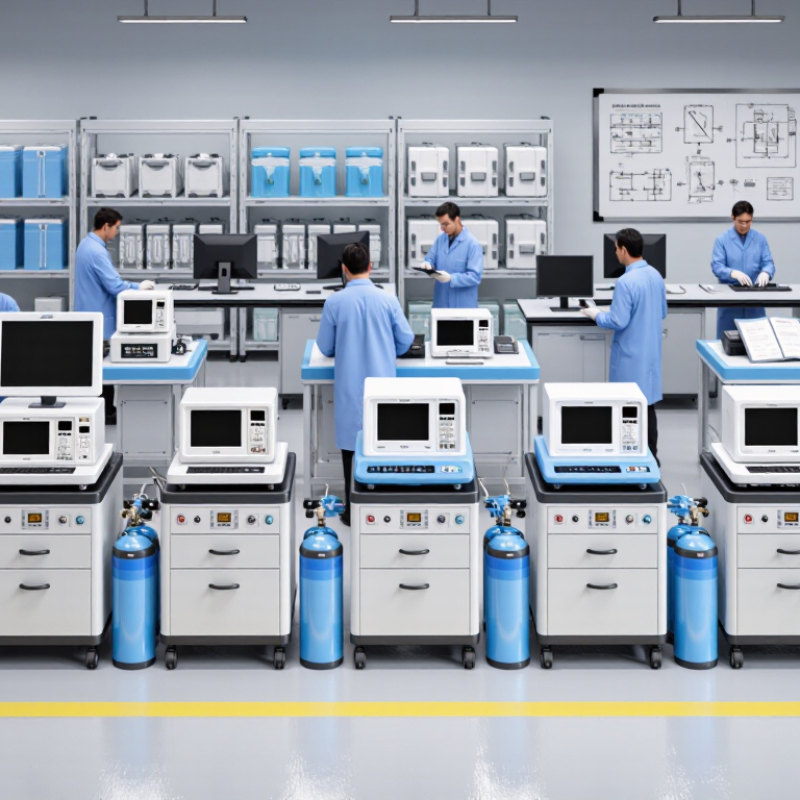
China Top 10 Ventilator Manufacturers What Are They For?

What Are Ventilators and How Do They Work?

A ventilator is a medical device that supports breathing when the lungs cannot work effectively. It moves air, oxygen, or both into the lungs. In invasive ventilation, a tube connects the patient to the machine. Non-invasive ventilation uses a sealed mask instead. The WHO’s Technical Specifications for Invasive and Non-Invasive Ventilation stresses oxygen monitoring, alarm systems, and trained clinical supervision. A 2024 Fortune Business Insights report estimated the global ventilator market at over US$4 billion in 2023. Market estimates differ, because researchers use different product definitions. That uncertainty deserves attention.

During inspiration, the ventilator pushes gas through a breathing circuit. Sensors measure pressure, flow, oxygen concentration, and exhaled volume. The controller then adjusts support according to preset values. Positive end-expiratory pressure, or PEEP, helps keep small airways open after exhalation. Alarms can identify disconnection, high pressure, or low oxygen supply. In practice, clinicians often adjust settings several times daily. Small errors matter. A ventilator supports the lungs, but it does not treat infection, trauma, or heart failure.

Tips: Confirm the patient’s size, lung condition, and oxygen target before selecting settings. Check circuit connections and humidification regularly. Watch the patient, not only the screen. The WHO recommends structured training, maintenance records, and reliable backup power. Local protocols should guide every adjustment.

What Are the Main Types and Medical Uses of Ventilators?

Ventilators are medical devices that support breathing when the lungs cannot move enough air. They help deliver oxygen and remove carbon dioxide. A clinician chooses pressure, volume, rate, and oxygen levels according to the patient’s condition. These settings require regular monitoring, not guesswork.

Invasive ventilators use an endotracheal tube placed through the mouth or nose. They support patients during major surgery, severe pneumonia, acute respiratory distress, or serious injuries. The tube provides a secure airway but can cause discomfort and throat irritation. Noninvasive ventilators use a fitted face or nasal mask. CPAP supplies continuous pressure, while BiPAP provides separate pressures for inhalation and exhalation. These systems may assist people with COPD flare-ups, sleep-related breathing disorders, or selected cases of respiratory failure. Not every patient is suitable.

Portable and home ventilators allow support outside intensive care, including during transport or long-term treatment. Neonatal ventilators use gentler pressures and smaller volumes for premature infants. Ventilators may also use volume-controlled or pressure-controlled modes, depending on lung mechanics. The categories overlap. A portable device can provide invasive or noninvasive support. That detail is easy to miss. In practice, mask fit, humidification, alarm settings, and patient cooperation can strongly affect performance. Equipment should be prescribed, adjusted, and checked by qualified medical professionals. A machine alone cannot replace airway assessment or continuous clinical judgment.

China Top 10 Ventilator Manufacturers What Are They For? - What Are the Main Types and Medical Uses of Ventilators?
No. Ventilator Type Patient Connection Typical Patient Group Primary Medical Uses Key Operating Characteristics Common Care Setting Important Consideration
1 Invasive Intensive Care Ventilator Endotracheal tube or tracheostomy Adults, children, and selected infants Acute respiratory failure, severe pneumonia, acute respiratory distress syndrome, postoperative support, and controlled ventilation during critical illness Provides volume-controlled, pressure-controlled, and supported spontaneous breaths; commonly includes synchronized modes, alarms, oxygen blending, and monitoring of airway pressure and delivered volume ICU Requires an artificial airway, continuous clinical monitoring, humidification, and trained staff; complications may include ventilator-associated pneumonia and lung injury
2 Non-Invasive Ventilator Face mask, nasal mask, or helmet Adults and children who can protect their airway Exacerbation of chronic obstructive pulmonary disease, selected cases of cardiogenic pulmonary edema, and respiratory insufficiency when intubation is not immediately required Supports breathing without an artificial airway, generally using continuous or bilevel positive airway pressure with leak compensation Emergency Department
Ward
ICU
Not suitable for patients who cannot protect the airway, are severely unstable, or cannot tolerate the interface; close observation is essential
3 Continuous Positive Airway Pressure Ventilator Nasal mask, full-face mask, or nasal pillows Primarily adults with obstructive sleep apnea Maintains upper-airway patency during sleep and may be used in selected cases of hypoxemic respiratory failure Delivers a constant positive pressure throughout inspiration and expiration rather than separately assisting each breath Sleep Laboratory
Home Care
Does not provide the same inspiratory pressure assistance as bilevel ventilation; mask fit, adherence, and humidification affect effectiveness
4 Bilevel Positive Airway Pressure Ventilator Non-invasive mask or, in some applications, an invasive airway Adults and children with selected obstructive or ventilatory disorders Sleep-related hypoventilation, chronic hypercapnic respiratory failure, COPD exacerbation, and selected neuromuscular or chest-wall disorders Uses a higher inspiratory positive airway pressure and a lower expiratory positive airway pressure to assist ventilation and reduce breathing effort Hospital
Sleep Care
Home Care
Requires appropriate pressure selection and monitoring of carbon dioxide, oxygenation, mask leaks, and patient tolerance
5 Transport Ventilator Endotracheal tube, tracheostomy, or compatible non-invasive interface Adults, children, and selected neonatal patients during transfers Maintains ventilatory support during ambulance transport, intrahospital transfer, retrieval missions, and movement between clinical departments Compact and battery-powered, with essential ventilation modes, oxygen supply options, alarms, and shock-resistant construction Ambulance
Patient Transfer
Battery duration, oxygen availability, environmental conditions, and limited monitoring capabilities must be checked before transport
6 Neonatal and Infant Ventilator Endotracheal tube, nasal prongs, or nasal mask Premature infants, newborns, and infants Respiratory distress syndrome, apnea of prematurity, neonatal respiratory failure, and postoperative support Designed for very small tidal volumes and sensitive patient triggering; may provide invasive ventilation, non-invasive support, and synchronized modes NICU
Delivery Room
Small leaks and circuit dead space can significantly affect performance; precise monitoring of pressure, volume, oxygen concentration, and temperature is required
7 Pediatric Ventilator Endotracheal tube, tracheostomy, or non-invasive interface Infants, children, and adolescents Acute respiratory failure, postoperative ventilation, asthma-related respiratory compromise, pneumonia, and chronic ventilatory support Offers a broad range of settings for smaller lungs, with adjustable flow delivery, pressure limits, volume targets, and pediatric alarm thresholds PICU
Operating Room
Transport
Settings must reflect the child’s size, disease, respiratory mechanics, and developmental stage; adult settings are not automatically appropriate
8 High-Frequency Oscillatory Ventilator Usually an endotracheal tube Selected neonates, children, and adults with severe respiratory failure Rescue or specialized ventilation when conventional ventilation cannot provide adequate gas exchange without potentially harmful airway pressures or volumes Uses very rapid, small-amplitude pressure oscillations around a constant mean airway pressure; gas exchange occurs with volumes often smaller than conventional tidal volumes Specialist ICU
NICU
Requires specialized expertise and close monitoring; it is not a routine first-line mode for every patient with respiratory failure
9 Home Mechanical Ventilator Tracheostomy or non-invasive mask Patients with chronic ventilatory insufficiency, including some neuromuscular, chest-wall, and chronic lung disorders Long-term ventilatory support, nocturnal hypoventilation, chronic respiratory failure, and step-down care after hospital discharge Designed for extended use, often with portable operation, battery support, data recording, alarms, and programmable invasive or non-invasive modes Home Care
Long-Term Care
Requires an individualized care plan, caregiver training, maintenance, backup power, emergency planning, and regular clinical follow-up
10 Anesthesia Ventilator Breathing circuit connected to a face mask, laryngeal mask, or endotracheal tube Patients undergoing general anesthesia Controls or assists ventilation during surgical procedures while anesthetic gases and oxygen are delivered Integrated into an anesthesia workstation and designed to work with breathing circuits, gas scavenging systems, vapor delivery, and operating-room monitoring Operating Room Used under continuous supervision by anesthesia professionals; circuit configuration, gas supply, leaks, and airway access must be checked before use
Note: Ventilator selection and settings must be determined by qualified healthcare professionals according to the patient’s diagnosis, age, respiratory mechanics, blood-gas results, and clinical response.

How to Evaluate China’s Top 10 Ventilator Manufacturers

China Top 10 Ventilator Manufacturers: What Are They For?

Evaluating China’s top ventilator manufacturers requires more than checking export rankings. “Top 10” is not an official medical category. Rankings often reflect sales, production capacity, or online visibility. Fortune Business Insights estimated the global ventilator market at about USD 4.5 billion in 2023. This growth increases competition, but it can also hide uneven technical quality. Buyers should examine registration records, intended-use statements, and independent test reports.

Safety comes first. Confirm compliance with IEC 60601-1, ISO 13485, and ISO 14971. These standards address electrical safety, quality management, and risk control. Ask for performance data at different oxygen pressures, tidal volumes, and battery conditions. A reliable supplier should provide traceable calibration records and clinical evaluation evidence. Product trials matter. A quiet device is not automatically a safe device.

Service reveals the real difference. WHO guidance stresses dependable oxygen systems, trained staff, maintenance, and spare-part access. Check response times, technician training, software-update controls, and local inventory. Request references from hospitals with similar workloads. Review complaint handling and recall procedures. Be skeptical of perfect claims. Some documents may be translated poorly or lack test context. That deserves careful questioning. Total cost also matters, including filters, sensors, preventive maintenance, and staff training. A lower purchase price may become expensive after eighteen months.

What Features and Standards Define Reliable Ventilator Suppliers?

Reliable ventilator suppliers are defined by evidence, not glossy catalogs. WHO reports that COPD caused 3.5 million deaths in 2021, showing why dependable respiratory support remains essential. Suppliers should disclose validation records, service coverage, and failure-response procedures. Ask for measured performance, not promises.

Core compliance begins with ISO 13485 quality management and ISO 14971 risk management. Electrical safety should align with IEC 60601-1. Ventilator-specific testing should address IEC 80601-2-12. These standards cover more than paperwork. They connect design controls, alarms, software, usability, and production checks. WHO technical specifications also emphasize oxygen concentration, pressure monitoring, alarms, and manual backup options. A reliable supplier can show test conditions, acceptance limits, and corrective-action records.

Inspect the unit at bedside. Check alarm audibility, battery behavior, displayed tidal volume, and circuit connections. Record results. Small gaps matter. A WHO and UNICEF oxygen-access report warns that many facilities still lack dependable oxygen systems, so ventilator quality cannot be separated from infrastructure. Suppliers should provide oxygen compatibility guidance, maintenance schedules, spare parts, and local training. I would question “maintenance-free” claims. Transparent limitations often indicate stronger reliability.

China Top 10 Ventilator Manufacturers: What Defines Reliable Suppliers?

Core international standards commonly used to evaluate ventilator safety, quality, risk control, software, and performance compliance.

The chart counts representative standards in each supplier-evaluation area. Reliable ventilator suppliers should provide current certificates, test reports, technical files, risk-management records, software documentation, and post-market surveillance evidence. Standards and regulatory requirements may vary by destination market and device classification.

How Are Ventilators Selected, Used, and Maintained?

China Top 10 Ventilator Manufacturers: What Are They For?

Ventilators support patients who cannot breathe adequately without assistance. Selection should begin with the patient, not the equipment catalogue. Clinicians assess oxygen levels, lung mechanics, consciousness, and the expected treatment period. A non-invasive device may suit some alert patients. Others require invasive ventilation through an airway tube.

It depends.

Key features include pressure and volume control, adjustable oxygen concentration, humidification, alarm visibility, and battery backup. Hospitals also examine cleaning procedures, replacement parts, training, and local technical support. A quiet screen helps in intensive care. Clear alarms matter even more. During use, trained professionals check chest movement, airway pressure, oxygen saturation, and patient comfort. Settings must follow the clinical plan and change with the patient’s condition.

Maintenance is practical, not cosmetic.

Staff should inspect tubing, filters, sensors, connectors, and power cables before each shift. Disposable components require correct replacement. Reusable parts need approved cleaning and drying. Calibration and safety testing should follow the manufacturer’s instructions and facility policy.

Keep records.

Small faults can become serious.

A loose connection may cause an unnoticed leak. An alarm may be silenced too quickly. Check twice. A checklist improves reliability, but it cannot replace judgment. Teams should review unusual readings, document corrective actions, and arrange qualified service when performance becomes uncertain.

FAQS

What is a ventilator?

A ventilator supports breathing when the lungs cannot move enough air effectively. It pushes air, oxygen, or both into the lungs. It supports breathing, but does not cure infection, injury, or heart problems.

How does a ventilator move air?

During inhalation, the machine pushes gas through a breathing circuit. Sensors measure pressure, flow, oxygen concentration, and exhaled volume. A controller adjusts support using preset settings. Small errors matter.

What is the difference between invasive and non-invasive ventilation?

Invasive ventilation uses a tube placed in the airway. Non-invasive ventilation uses a sealed mask. The choice depends on consciousness, lung function, oxygen levels, and treatment needs. It depends.

What does PEEP do?

Positive end-expiratory pressure helps keep small airways open after exhalation. This may improve oxygen movement. Clinicians must adjust it according to the patient’s condition.

How are ventilator settings selected?

Clinicians consider patient size, lung condition, oxygen targets, and expected treatment length. They may adjust pressure, volume, oxygen concentration, and humidification. Settings should follow local clinical protocols.

What should staff monitor during ventilation?

Staff should watch chest movement, airway pressure, oxygen saturation, breathing comfort, and the patient’s overall appearance. The screen is useful. The patient matters more.

What safety features are important?

Clear alarms can identify disconnections, high pressure, and low oxygen supply. Battery backup supports operation during power interruptions. Reliable alarms need trained staff and regular checking.

How should ventilators be maintained?

Before each shift, inspect tubing, filters, sensors, connectors, and power cables. Replace disposable parts correctly. Clean and dry reusable components according to approved procedures. Keep records.

What problems can occur during ventilator use?

A loose connection can create an unnoticed leak. Silencing an alarm too quickly can hide a serious problem. Check twice. Unusual readings require review and documentation.

Can a checklist replace professional judgment?

No. A checklist improves reliability, but it cannot replace trained clinical judgment. Teams should question unexpected results and request qualified service when performance becomes uncertain. False confidence is possible.

Conclusion

This article explains what ventilators are, how they support or control breathing, and what is a medical ventilator used for in hospitals and home-care settings. It introduces major ventilator types, including invasive and non-invasive systems, and describes their applications in intensive care, surgery, emergency treatment, and long-term respiratory support. The discussion also considers how China’s top 10 ventilator manufacturers can be evaluated through product performance, clinical adaptability, safety, usability, technical support, and manufacturing consistency.

Reliable ventilator suppliers should follow recognized quality and safety standards, provide accurate monitoring, stable airflow control, alarm systems, and dependable maintenance services. The article further outlines how healthcare professionals select equipment according to patient needs, treatment goals, and care environments. Proper operation requires trained personnel, suitable settings, regular cleaning, preventive maintenance, software checks, and timely replacement of consumable parts. These factors help improve patient safety, operational efficiency, and long-term equipment reliability.

Aria

Aria

Aria is a dedicated marketing professional with a deep passion for innovative strategies and a keen understanding of our company's product offerings. With a wealth of experience in the industry, Aria excels at crafting engaging content that highlights the unique features and benefits of our......