China Top Ventilators When Does a Patient Need One?

Time:2026-10-12 Author:Mason
0%

When does a patient need a ventilator? This question often arises during severe pneumonia, acute respiratory distress, major surgery, or sudden respiratory failure. A ventilator may be considered when the lungs cannot provide enough oxygen or remove enough carbon dioxide. It may also help when breathing becomes dangerously exhausting.

Critical-care physician Dr. John J. Marini has described mechanical ventilation as “a life-supporting therapy, not a cure.” That distinction matters. A ventilator supports breathing while clinicians treat the underlying problem. It does not automatically heal damaged lungs.

Doctors assess several clues together. These may include persistent low oxygen levels, rising carbon dioxide, worsening blood-gas results, rapid breathing, confusion, or visible exhaustion. A patient struggling to speak, showing chest retractions, or becoming difficult to wake may need urgent evaluation. One number never tells the whole story.

Some patients improve with oxygen or non-invasive ventilation through a face mask. Others require an endotracheal tube and invasive ventilation in an intensive-care unit. The decision depends on the illness, airway protection, response to treatment, and overall medical condition. It should never rely only on a product brochure or brand label, including claims about China top ventilators.

A reliable ventilator must support accurate pressure, volume, alarms, humidification, and safe monitoring. Still, equipment quality cannot replace trained clinicians. No checklist is perfect. Clinical judgment remains essential.

This article will explain when does a patient need a ventilator, how doctors evaluate the decision, and what hospitals should examine when comparing ventilator technology.
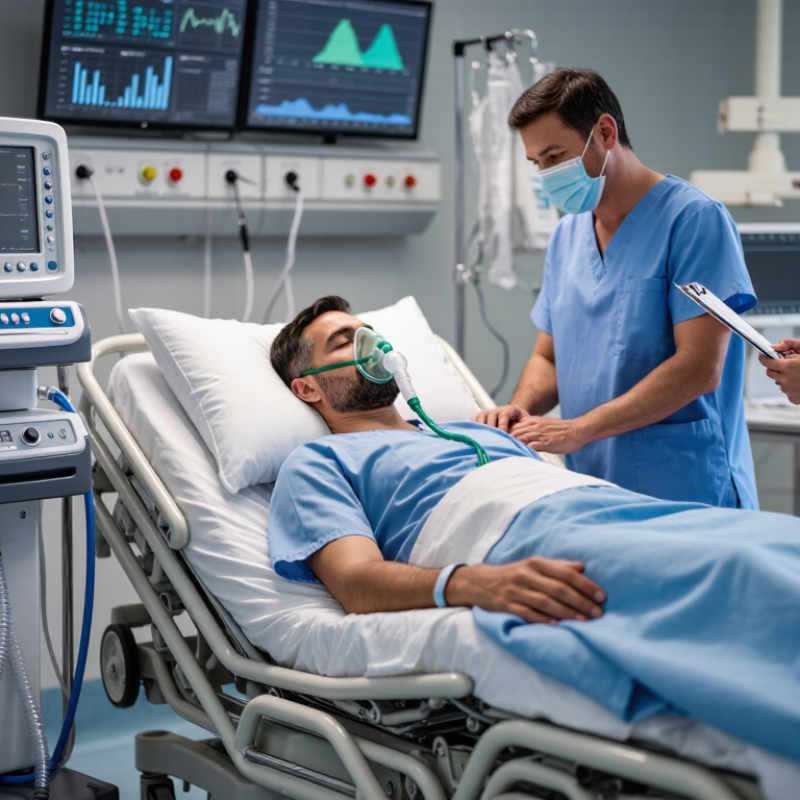
China Top Ventilators When Does a Patient Need One?

What Is a Medical Ventilator and How Does It Work?

A medical ventilator is a machine that supports breathing when a patient cannot move enough air independently. It does not simply “give oxygen.” Instead, it helps deliver a controlled mixture of oxygen and air into the lungs. It also helps remove carbon dioxide, a waste gas that can build up during respiratory failure.

The machine connects through a mask or an artificial airway, such as an endotracheal tube. Sensors measure pressure, airflow, and breathing volume with each cycle. Clinicians then adjust settings, including oxygen concentration, breathing rate, and airway pressure. These choices depend on lung condition, blood gas results, age, and overall health.

A patient with severe pneumonia may need support because swollen lung tissue blocks oxygen transfer.

Someone with muscle weakness may need help moving air, even when the lungs look relatively clear.

Timing matters.

Doctors usually consider ventilation when oxygen stays dangerously low, carbon dioxide rises, breathing becomes exhausting, or the patient cannot protect the airway. Non-invasive ventilation may use a fitted mask, while invasive ventilation requires a tube and closer monitoring. Both methods can cause problems, including skin injury, dry airways, lung pressure damage, or infection risks. The machine also does not replace clinical judgment. Settings can be changed gradually as the patient improves, but recovery is rarely perfectly predictable. A monitor may look stable while fatigue is quietly increasing, so repeated assessment remains essential.

Which Conditions May Require Mechanical Ventilation?

China Top Ventilators: When Does a Patient Need One?

A patient may need mechanical ventilation when the lungs cannot maintain oxygen or remove carbon dioxide. Clinicians also consider airway protection, breathing effort, and mental status. This is a monitored clinical decision, not a simple machine purchase. Severe pneumonia, acute respiratory distress syndrome (ARDS), and aspiration can cause rapidly worsening oxygen failure. COPD exacerbations may produce dangerous carbon dioxide retention. Stroke, medication toxicity, spinal injury, or neuromuscular disease can weaken breathing.

The LUNG SAFE study examined 29,144 ICU patients in 459 ICUs across 50 countries. Published in JAMA, it found ARDS in 10.4% of ICU admissions and 23.4% of ventilated patients. These figures show how frequently respiratory failure appears in critical care. They cannot predict one person’s need. American Thoracic Society guidance supports lung-protective ventilation for ARDS, commonly using 4–8 mL/kg predicted body weight.

Before intubation, teams may try oxygen therapy or noninvasive ventilation when appropriate. They monitor respiratory rate, blood gases, oxygen saturation, and fatigue. A falling consciousness level or persistent distress can change the plan quickly. Not every low oxygen reading requires intubation. Monitoring errors happen. Movement, poor sensor contact, and delayed blood tests can mislead decisions. Local protocols, staffing, and equipment also matter, especially during surges. The decision needs reassessment, not a single number.

How Do Doctors Decide When Ventilator Support Is Needed?

Doctors do not prescribe ventilator support from one oxygen reading. They assess breathing effort, blood gases, mental status, circulation, and the patient’s trend. A patient breathing 38 times per minute, using neck muscles, and becoming confused may need urgent support. So may someone who cannot protect the airway. Numbers guide judgment.

The Berlin Definition classifies acute respiratory distress syndrome by a PaO2/FiO2 ratio below 300, with at least 5 cmH2O of PEEP. That threshold supports diagnosis, not automatic intubation. Doctors also consider whether oxygen masks or non-invasive ventilation are working. Worsening carbon dioxide, persistent exhaustion, shock, or vomiting can make invasive ventilation safer. The decision is not perfectly tidy.

Once a ventilator is chosen, protective settings matter. The ARDS Network trial reported 31.0% mortality with lower tidal volumes, compared with 39.8% using traditional volumes. Current critical-care guidance commonly begins near 6 mL/kg of predicted body weight and limits plateau pressure below 30 cmH2O in ARDS. These values are clinical guardrails, not fixed recipes. Body size, lung stiffness, blood pressure, kidney function, and patient goals still change the plan. Experienced teams reassess frequently, often within minutes after intubation. A single early improvement can be misleading.

What Types of Ventilators Are Commonly Used in China?

China Top Ventilators: What Types Are Commonly Used in China?

China’s hospitals commonly use invasive ventilators, non-invasive ventilators, transport ventilators, and high-flow oxygen systems. Invasive ventilators support patients through an endotracheal tube or tracheostomy. They are common in intensive care units after severe pneumonia, surgery, trauma, or respiratory failure. Non-invasive devices deliver pressure through a fitted mask. CPAP provides steady pressure, while BiPAP provides separate inhalation and exhalation pressures. A 2023 World Health Organization report links effective respiratory care with oxygen supply, trained staff, monitoring, and maintenance. The machine alone is never enough.

Transport ventilators are smaller and battery-powered. Ambulances and emergency departments use them during transfers. High-flow nasal oxygen is not technically a ventilator, but Chinese hospitals often use it before or after mechanical ventilation. National health planning reports have emphasized expanding critical-care capacity, especially after the COVID-19 period. Yet equipment numbers do not guarantee safe care. Staffing, alarm response, and oxygen pipeline reliability still matter. I have seen specifications look impressive, while routine maintenance received less attention. That gap deserves honest review.

Tips: Ask which mode is needed, who will operate it, and how oxygen will be supplied. Confirm battery duration, humidification, alarm visibility, and cleaning procedures. Never choose pressure settings without a qualified clinician. A patient may need ventilation when breathing becomes dangerously weak, oxygen remains low despite treatment, or carbon dioxide rises. The decision depends on examination, blood gases, imaging, and the underlying illness. Rules vary by patient.

What Should Patients and Families Expect During Ventilation?

When a patient needs mechanical ventilation, the care team explains why breathing support is necessary. It may help during severe infection, surgery, lung injury, or extreme fatigue. Some patients use a tight mask, while others need a breathing tube placed through the mouth. The tube can feel uncomfortable. Sedation may reduce distress, but it also causes drowsiness and confusion. Patients usually cannot speak normally while the tube is in place. Simple communication boards, hand signals, and writing can help.

Expect a busy intensive care environment. Machines may beep often, even when no immediate danger exists. Nurses regularly check oxygen levels, breathing pressure, blood tests, blood pressure, and comfort. Families may see frequent suctioning, repositioning, and mouth care. These actions can look alarming. They are routine parts of preventing complications. Patients may experience dry lips, weakness, poor sleep, or vivid dreams. Delirium is also possible, and it can change from hour to hour.

The team will review sedation, nutrition, mobility, infection risks, and daily breathing trials. During weaning, the ventilator gradually provides less assistance. Progress is rarely perfectly steady. A patient may improve, then need more support again. That is not always a failure. Families should ask what each alarm means, how pain is assessed, and what signs show readiness for tube removal. They can speak calmly, identify themselves, and bring familiar photographs. Small details matter. Even experienced teams cannot predict the exact ventilation time for every patient.

China Top Ventilators: When Does a Patient Need One? — What Should Patients and Families Expect During Ventilation?
Clinical Situation Why Ventilatory Support May Be Needed Common Signs Clinicians Assess Typical Support Option What Patients and Families May Expect Important Considerations
Severe difficulty breathing The lungs may not bring enough oxygen into the blood or remove enough carbon dioxide.
  • Very rapid or labored breathing
  • Low oxygen saturation despite oxygen therapy
  • Exhaustion or inability to speak comfortably
  • Confusion or reduced alertness
Supplemental oxygen, non-invasive ventilation, or invasive mechanical ventilation depending on severity. Breathing rate, oxygen levels, blood gases, and mental status are monitored frequently. Support may be increased or reduced according to the response. The decision is based on the whole clinical picture, not on one oxygen reading alone.
Acute respiratory failure The respiratory system cannot maintain adequate oxygenation or carbon-dioxide removal without assistance.
  • Abnormal arterial blood-gas results
  • Worsening oxygenation
  • Rising carbon dioxide with acidity
  • Increasing work of breathing
Non-invasive ventilation may be attempted in selected patients; invasive ventilation may be required if support fails or the airway is unsafe. A respiratory therapist or clinical team adjusts settings and checks comfort, breathing effort, and laboratory results. Urgent treatment of the underlying cause—such as infection, asthma, heart failure, or poisoning—is also essential.
Severe pneumonia or acute lung injury Inflammation and fluid in the lungs can make oxygen transfer difficult.
  • Increasing oxygen requirement
  • Fast breathing and fatigue
  • Abnormal chest imaging
  • Low blood oxygen despite treatment
High-flow oxygen or non-invasive support may be considered; invasive ventilation may be needed for severe or worsening cases. Patients may be positioned to improve oxygenation. In selected severe cases, clinicians may recommend prone positioning while closely monitoring the patient. Ventilation treats breathing failure; antibiotics or other targeted treatment may be needed for the underlying illness.
Reduced consciousness or inability to protect the airway A patient who cannot cough, swallow, or remain awake may aspirate secretions or vomit.
  • Absent or weak protective reflexes
  • Repeated choking or aspiration
  • Severe drowsiness
  • Airway obstruction risk
Endotracheal intubation and invasive mechanical ventilation may be required. A breathing tube is placed through the mouth or nose into the windpipe. Sedating medicine is commonly used during and after placement when appropriate. The team evaluates neurological status and the cause of reduced consciousness while protecting the airway.
During major surgery or anesthesia Anesthetic medicines can temporarily reduce spontaneous breathing and protective reflexes.
  • General anesthesia
  • Muscle-relaxing medicines
  • Need for controlled breathing during surgery
Usually short-term invasive ventilation through an endotracheal tube. The ventilator supports breathing during the operation. The tube is generally removed when the patient is awake enough and breathing safely, if recovery is uncomplicated. Some patients need longer support because of pre-existing lung disease, complications, or slow recovery from anesthesia.
Chronic respiratory muscle weakness Neuromuscular conditions can make the breathing muscles too weak to maintain ventilation, especially during sleep or illness.
  • Weak cough
  • Morning headaches or daytime sleepiness
  • Shallow breathing
  • Repeated chest infections
Non-invasive ventilation, often delivered through a nasal or full-face mask, may be used at night or for longer periods. Mask fitting, humidification, cough assistance, and gradual adjustment of settings may be needed to improve comfort and effectiveness. A respiratory specialist should determine the treatment plan and review carbon-dioxide levels, sleep symptoms, and mask tolerance.
Exacerbation of chronic obstructive pulmonary disease Airway narrowing and excess carbon dioxide can increase the work required to breathe.
  • Worsening breathlessness
  • Increased carbon dioxide
  • Acidic blood-gas results
  • Fatigue despite medical treatment
Non-invasive ventilation is often considered for selected patients with acute hypercapnic respiratory failure; invasive ventilation may be required if it is unsuccessful or unsuitable. The mask may feel tight at first. Staff monitor leaks, breathing effort, alertness, blood gases, and the ability to clear secretions. Bronchodilators, steroids, antibiotics when indicated, and controlled oxygen therapy may be used alongside ventilatory support.
Failure to improve with non-invasive ventilation A mask-based approach may not provide enough support or may be unsafe when the patient cannot cooperate or protect the airway.
  • Worsening blood gases
  • Persistent severe distress
  • Falling level of consciousness
  • Inability to manage secretions
Endotracheal intubation and invasive mechanical ventilation may be recommended. The clinical team explains the urgency, prepares equipment, gives appropriate medicines, and confirms tube placement using clinical checks and imaging or other accepted methods. Families may be asked about the patient’s wishes, advance directives, and acceptable treatment goals when time allows.
What invasive ventilation involves A ventilator delivers supported breaths through a tube placed in the windpipe.
  • Continuous bedside monitoring
  • Oxygen and pressure measurements
  • Repeated blood-gas testing when needed
Mechanical ventilation through an endotracheal tube; a tracheostomy may be considered if prolonged support is expected. The patient may be unable to speak while the tube is in place. Communication boards, writing, gestures, and family support can help. Possible complications include discomfort, ventilator-associated infection, airway injury, low blood pressure, and weakness from prolonged critical illness.
Weaning and ventilator removal Ventilator support can be reduced when the underlying illness improves and the patient can breathe and protect the airway adequately.
  • Improved oxygenation
  • Stable blood pressure and heart rate
  • Improved alertness
  • Acceptable breathing effort
  • Successful spontaneous breathing trial
Gradual reduction of support, spontaneous breathing trials, and extubation when clinical criteria are met. After tube removal, a sore throat, hoarse voice, cough, fatigue, or temporary need for oxygen may occur. Some patients need continued non-invasive support. Recovery time varies. Rehabilitation, nutrition, mobility training, and follow-up may be needed after prolonged ventilation.

Medical decisions about ventilator use must be made by the treating clinical team. A ventilator is supportive therapy and does not by itself treat the underlying disease.

FAQS

What is a medical ventilator?

It supports breathing when a patient cannot move enough air independently. It delivers a controlled oxygen-air mixture and helps remove carbon dioxide. It is not simply an oxygen machine.

How does ventilator support reach the lungs?

Air enters through a fitted mask or artificial airway. Sensors track pressure, airflow, and breathing volume during each cycle. Clinicians adjust oxygen concentration, breathing rate, and airway pressure.

When might doctors consider ventilation?

They assess oxygen levels, carbon dioxide, breathing effort, mental status, circulation, and recent changes. Warning signs include severe exhaustion, confusion, dangerously low oxygen, or inability to protect the airway. One reading is not enough.

What is the difference between non-invasive and invasive ventilation?

Non-invasive support uses a fitted mask. Invasive support uses a breathing tube or tracheostomy. Invasive care requires closer monitoring. Masks may irritate skin, while tubes can increase airway and infection risks.

What ventilator types are common in hospitals in China?

Hospitals commonly use invasive, non-invasive, and transport ventilators. High-flow nasal oxygen is also widely used, although it is not technically a ventilator. Transport units use batteries during transfers.

What makes ventilator care safer?

Skilled staff, reliable oxygen, visible alarms, cleaning, humidification, and maintenance all matter. Equipment numbers alone prove little. Impressive specifications can hide weak routine servicing.

Are ventilator pressure and volume settings fixed?

No. Clinicians consider predicted body weight, lung stiffness, blood gases, blood pressure, kidney function, and treatment goals. Protective settings often begin near 6 mL/kg in certain acute lung injuries. This is only a guide.

What should families ask about ventilator support?

Ask which mode is planned, who will operate it, and how oxygen will be supplied. Also ask about battery duration, humidification, alarm visibility, and cleaning. Do not adjust pressures yourself.

Can a stable monitor guarantee recovery?

No. Fatigue may increase quietly while numbers look stable. Teams reassess repeatedly and change support gradually. Recovery can be uneven. That uncertainty matters.

Conclusion

A medical ventilator is a machine that supports breathing by delivering oxygen-rich air into the lungs and helping remove carbon dioxide when a patient cannot breathe effectively alone. The question “when does a patient need a ventilator” depends on the seriousness of their condition, oxygen levels, breathing effort, and overall response to treatment. Mechanical ventilation may be considered for severe pneumonia, respiratory failure, serious injuries, complications after surgery, or conditions that weaken the muscles used for breathing.

Doctors make this decision by assessing symptoms, blood oxygen and carbon dioxide levels, imaging results, consciousness, and the patient’s ability to protect their airway. In China, commonly used options include intensive-care ventilators, transport ventilators, noninvasive ventilation devices, and home-support machines, depending on medical needs. Patients and families can expect close monitoring, careful adjustment of settings, and possible communication difficulties while support is provided. The healthcare team should explain the purpose, expected duration, comfort measures, and progress throughout treatment.

Mason

Mason

Mason is a seasoned marketing professional with a deep expertise in the company's offerings and a passion for driving brand awareness. With a strong background in digital marketing strategies, he has an innate ability to connect with diverse audiences and effectively communicate product benefits.......